The guy with rigs named BAREKET is also a SCAM rig owner as well. I had only one rig and 2 tickets about this rig, so you can imagine how it is hard for support to find out the provider name and the rig name. The good thing is: I lost only about 20$ on this shit. So, don't buy anything at leaserig.net because you will be SCAMMED by SCAMMERS.
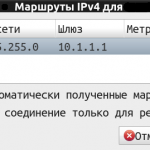
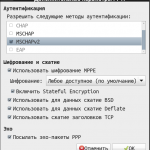
Постоянно отваливается - если не указать stateful encryption в настройках.
Нет пинга при сплите (использовать это соединение только для ресурсов в этой сети) потому, что в Network Manager баг, и надо маршруты прописывать ручками
https://bugs.launchpad.net/ubuntu/+source/network-manager-pptp/+bug/953861
Прикрепляю картиночки, чтоб не забыть этот ужас грёбаный.
2014-04-07, Фраза дня
Сначала сделай, чтобы было. Затем — чтобы было красиво. Затем — чтобы было быстро.
2014-04-01, Фраза дня
Особенно в юности следует остерегаться приписывания себе избытка сил, которого на самом деле нет.
Данное сообщение то появлялось, то исчезало, без видимых причин. Проблема появилась из-за использования VGA-удлиннителя на мониторе и с заменой пары VGA-кабель->VGA удлиннитель на простой длинный VGA провод, проблема исчезла.
2014-03-23, Фраза дня
Лучше задать глупый вопрос, чем сделать глупость.
2014-03-02, Фраза дня
Весной 2012 года разразился скандал, когда отец двенадцатилетней школьницы пожаловался, что его дочери присылают буклеты с предложениями для беременных. Когда сеть Target уже приготовилась признавать ошибку и извиняться перед обиженными покупателями, выяснилось, что девочка действительно была беременна, хотя ни она, ни ее отец на момент жалобы не знали об этом. Алгоритм отловил изменения в поведении покупательницы, характерные для беременных женщин.
2014-02-26, Фраза дня
I got an F and a C, and I got a K too
And the only thing that's missing is you
2014-02-26, Рекомендую
Наиболее перспективен, на мой взгляд, JSONSelect поскольку всё остальное мало понятная неудобная хрень. Но json:select() ешё не доделан до конца, там не так много фич, поэтому мы будем страдать.
json:select() http://jsonselect.org/#tryit
 ".author .drinkPref :first-child"

{
  "author": {
    "name": {
      "first": "Lloyd",
      "last": "Hilaiel"
    },
    "drinkPref": [
      "whiskey",
      "beer",
      "wine"
    ],
  },
  "thing": "JSONSelect site",
  "license": "(cc) BY-SA"
}

Result: "whiskey"

JSONSelect = require("JSONSelect")
JSONSelect.forEach(".points_to_delete .id",args,function(){
    result.push(arguments)
})
jsel https://github.com/dragonworx/jsel
dom.select('count(//*)') === 5;
dom.select('@title') === 'abc';
dom.select('//children/*[1]/@foo') === 'bar';
dom.select('count(//@foo)') === 2;
dom.select('//@foo[2]') === 555;
dom.select('count(//children//*)') === 2;
dom.select('//children/*[2]') === 'val';
dom.select('name(//children/*[2])') === 'string';
dom.select('name(*/*[2])') === 'subData';
dom.select('*/children/*[2]/text()') === 'val';
dom.selectAll('//@foo') === ['bar', 555];
JSPath https://github.com/dfilatov/jspath
 Quick example

JSPath.apply(
    '.automobiles{.maker === "Honda" && .year > 2009}.model',
    {
        "automobiles" : [
            { "maker" : "Nissan", "model" : "Teana", "year" : 2011 },
            { "maker" : "Honda", "model" : "Jazz", "year" : 2010 },
            { "maker" : "Honda", "model" : "Civic", "year" : 2007 },
            { "maker" : "Toyota", "model" : "Yaris", "year" : 2008 },
            { "maker" : "Honda", "model" : "Accord", "year" : 2011 }
        ],
        "motorcycles" : [{ "maker" : "Honda", "model" : "ST1300", "year" : 2012 }]
    });

Result will be:

['Jazz', 'Accord']
JsonPath http://goessner.net/articles/JsonPath/
$['store']['book'][0]['title']
$.store.book[*].author
$..author
$.store.*
$.store..price
$..book[2]
$..book[(@.length-1)]
$..book[-1:]
$..book[0,1]
$..book[:2]
$..book[?(@.isbn)]
$..book[?(@.price<10)]
$..*
jLinq http://hugoware.net/Projects/jLinq
//select records
jlinq.from(data.source)
  .starts('first', 'a')
  .select();

//complex queries - no need to repeat names
//when querying the same field
jlinq.from(data.source)
    .starts('first', 'a')
    .or('b')
    .or('c')
    .sort('last')
    .select();

//sorting - multiple field
jlinq.from(data.source)
  .greater('age', 40)
  .sort('age', 'name');
  .select();
http://espadrine.github.io/New-In-A-Spec/es6/
EcmaScript Sixth Edition
let, const (define block-local vars), function in block scope
destructuring: let {x, y} = pt; let [s, v, o] = triple(); (assuming let pt = {x:2, y:-5}, for instance).
parameter default values: function f(x, y=1, z=0) {⋯}
rest: function g(i, j, ...r) { return r.slice(i, j); } (instead of using arguments like a madman).
spread: let a = [0,1,2,3], o = new Something(...a);
proxies: let obj = Proxy.create(handler, proto). Long story short: ~ operator overloading with object-like elements.
weak map: let map = new WeakMap. Use it if you have circular references in it.
generators: function* gen() { yield 1; yield 2; } Actually, gen() returns ~ an object with a next() function property.
iterators: for (var [key, val] of items(x)) { alert(key + ',' + val); }. Iterators can be generators or proxies.
array and generator comprehension: [a+b for (a in A) for (b in B)] (array comprehension), (x for (x of generateValues()) if (x.color === 'blue')) (generator expression).
binary data: const Pixel = new StructType({x:uint32, y:uint32, color:Color}) (if Color is itself a StructType), new ArrayType(Pixel, 3).
class syntax, with extends, prototype, and super:
class Point extends Base {
constructor(x,y) {
super();
this[px] = x, this[py] = y;
this.r = function() { return Math.sqrt(x*x + y*y); }
}
get x() { return this[px]; }
get y() { return this[py]; }
proto_r() { return Math.sqrt(this[px] * this[px] +
this[py] * this[py]); }
equals(p) { return this[px] === p[px] &&
this[py] === p[py]; }
}modules:
module math {
export function sum(x, y) {
return x + y;
}
export var pi = 3.141593;
}import {sum, pi} from math;
alert(sum(pi,pi));quasis: multiline, substitution-ready strings with extensibility. `You are ${age} years old.`.
// The following regexp spans multiple lines.
re`line1: (words )*
line2: \w+`// It desugars to:
re({raw:'line1: (words )*\nline2: \w+',
cooked:'line1: (words )*\nline2: \w+'})